
After hitting a record high in January, spot gold (XAU/USD) has fallen off the cliff.
Extreme optimism, renewed upward pressure on global bond yields, and reduced scope for interest rate cuts have put the brakes on gold’s spectacular rally since 2022.
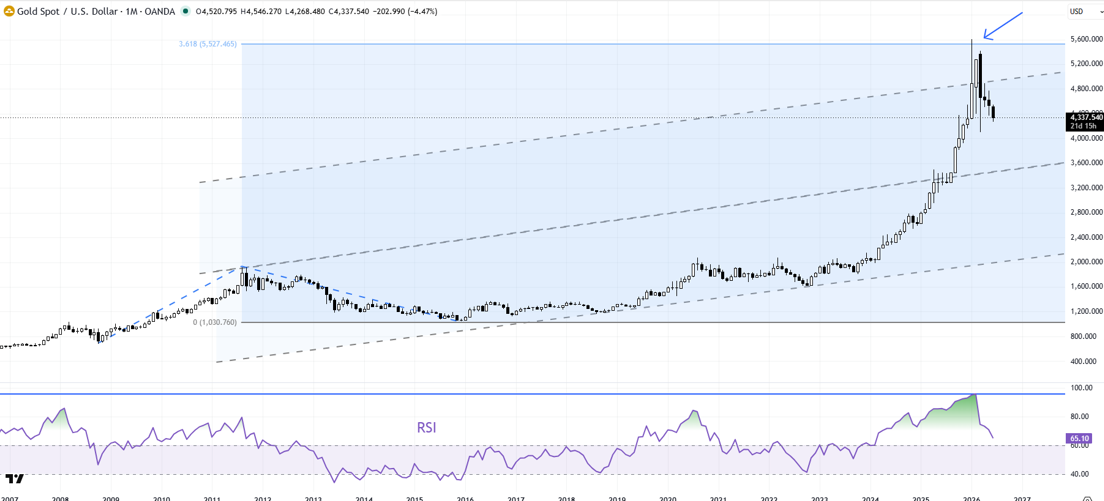
At the start of the year, the 14-month Relative Strength Index (RSI) hit 95, significantly above the 70-mark classified as overbought territory. The RSI is a bounded indicator that rotates within 0-100.
RSI levels close to 100 tend to be unsustainable, resulting in a retreat in price, and at times, abruptly, like in the case of gold.
Overshooting of RSI levels coupled with stiff resistance at 5600 (the 3.618x Fibonacci extension of the 2008-2015 upswing) were instrumental in capping gold’s rise.
Spot Gold (XAUUSD; Monthly)
Structural Demand Continues to Support Gold
After the initial knee-jerk reaction to the conflict in the Middle East in the form of safe-haven bids, gold has been gradually sold off. A direct fallout from the effective closure of the Straits of Hormuz is elevated oil prices, feeding into broader inflationary pressures as second-round effects.
Rising price pressures tend to constrain central banks’ ability to cut interest rates.
Inflation as measured by the personal consumption expenditures price index, the US Federal Reserve’s preferred inflation gauge for policy settings, rose 3.8% on-year in April, the highest since May 2023.
The market mostly expects the Fed to remain on hold for the rest of this year, with the next move in interest rates to be up, rather than down.
As interest rates go up, the opportunity cost of holding the non-yielding yellow metal goes up, reducing the preference to hold gold for interest rate-sensitive investors.
Having said that, while the cyclical demand for gold may have been affected at the margin, the structural demand for gold remains intact.
Lingering geopolitical uncertainty, worries about ballooning US debt, and continued FX reserves diversification by global central banks are likely to underpin the demand for gold.
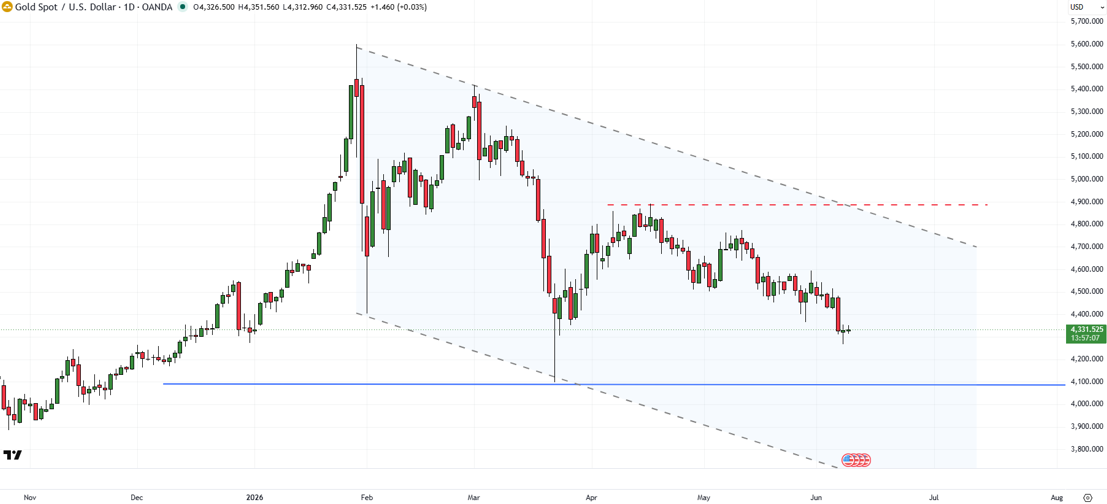
Spot Gold (XAUUSD; Daily)
Gold Investment Outlook
Global central banks have been diversifying into gold as a store of value. Diversification of FX reserves is one of the major structural demand components that have contributed to the strong upward trajectory of the yellow metal.
Given that the structural demand for gold remains in place, it would be hard to conceive a sustained downtrend. Indeed, gold is approaching a strong support level at the March low of 4100. Subsequent support is seen at the October 2025 low of 3875.
From a strategy perspective, I would consider small longs as gold approaches 4100. Granted, this would be akin to catching a falling knife, but a 25% decline from the peak in a structural bull market makes it enticing.
Moreover, gold can be an automatic stabilizer in the portfolio in times of risk aversion.
FAQ
Why has gold fallen despite geopolitical tensions?
While geopolitical uncertainty initially increased safe-haven demand, rising bond yields and expectations of higher interest rates have weighed on gold prices, reducing investor appetite for non-yielding assets.
What is the main support level for gold right now?
According to the analysis, the March low around 4100 represents a significant support level, with additional support near 3875.
How do interest rates affect gold prices?
Higher interest rates increase the opportunity cost of holding gold because gold does not generate income. This often leads investors to favor interest-bearing assets instead.
Why are central banks buying gold?
Central banks continue to diversify their foreign exchange reserves and view gold as a store of value, supporting long-term demand for the precious metal.
The earlier gold setup that got filled offers useful context for how this call developed.