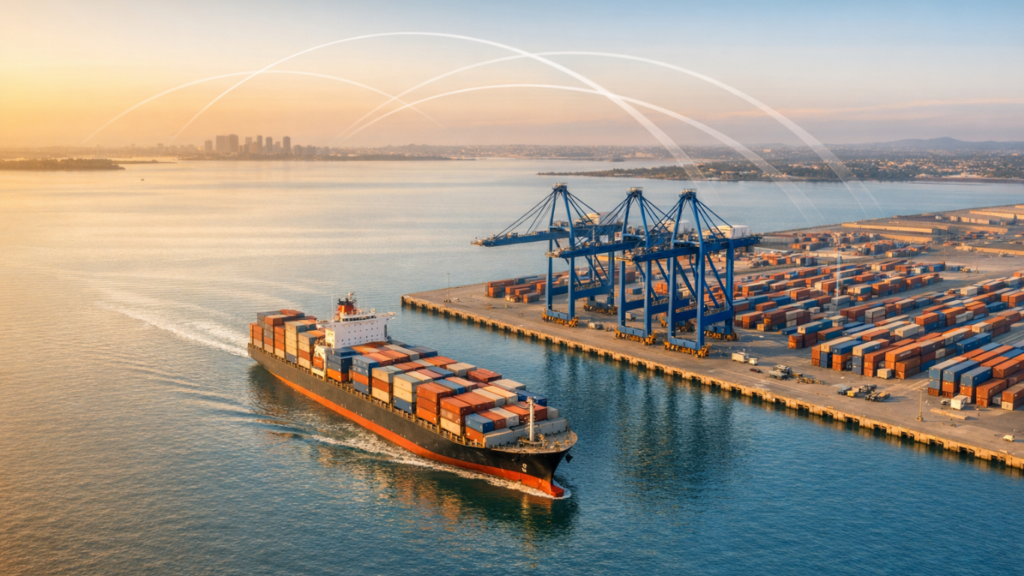
Trade agreements simplify international trade by reducing tariffs and offering legal protections like National Treatment and Most-Favoured-Nation (MFN) status. They help open markets and lower costs for businesses. However, tariffs – essentially taxes on imports – can increase costs, disrupt supply chains, and deter investment. For instance, steep tariff hikes have been linked to a 21% drop in new manufacturing projects.
Key points:
- Trade agreements reduce barriers and create predictable rules for investors.
- Tariffs raise costs, especially for industries reliant on imports, and can force companies to relocate production.
- Sectors like upstream industries (e.g., metals, plastics) face higher risks due to increased material costs, while downstream industries (e.g., autos, electronics) may benefit from “tariff-jumping” investments.
- Uncertainty from tariffs can slow down large, long-term investments, as seen when US-China tariffs reached record highs in 2025.
To navigate these challenges:
- Diversify investments across less tariff-sensitive sectors like healthcare or utilities.
- Monitor trade policy updates to anticipate changes.
- Consider systematic trading strategies to manage market volatility.
Trade agreements, like the ASEAN Free Trade Area (AFTA), mitigate tariff effects by reducing costs and improving market access. However, challenges like compliance with rules of origin and phased tariff reductions still exist. Staying informed and using structured investment strategies can help you manage risks in a tariff-affected market.
sbb-itb-466c9b0
How Tariffs Create Investment Problems
Supply Chain Disruptions and Rising Costs
Tariffs have a ripple effect across supply chains, driving up costs at every stage of production. When governments impose broad-based tariffs, the expense of importing raw materials and intermediate goods climbs significantly, cutting into profit margins.
For example, a 25% tariff can raise the price of investment goods like machinery and production equipment by 9.5%, while consumer goods see a smaller increase of 2.2%. This is particularly impactful because about 38% of private investment in equipment depends on imported components. As a result, capital expenditure becomes highly sensitive to these trade barriers.
Businesses that rely on cross-border supply chains – known as vertical investment – are especially vulnerable. High tariffs can make importing intermediate parts prohibitively expensive, forcing companies to either absorb financial losses or overhaul their operations entirely. The consequences of these rising costs vary across different sectors, as shown below.
Sectors Most Exposed to Tariff Risks
The impact of tariffs depends on whether a sector operates upstream (producing raw materials and inputs) or downstream (assembling finished products for consumers). Here’s a closer look:
| Sector Type | Typical Industries | Impact of High Tariffs | Primary Reason |
|---|---|---|---|
| Upstream | Metals, Petroleum, Plastics, Pharmaceuticals | Highly negative | Increased costs for core inputs |
| Downstream | Autos, Machinery, Electronics | Mixed – may attract tariff-jumping investment | Firms relocate production to avoid tariffs |
| Investment Goods | Production equipment | Sharp price inflation (+9.5%) | High reliance on imported components |
Upstream industries are hit hardest because tariffs act like a tax on the materials they depend on. Downstream industries, on the other hand, sometimes adapt by relocating production to the tariff-imposing country. This strategy, known as tariff-jumping, works best for businesses with simpler supply chains.
Investor Uncertainty and Market Volatility
Tariffs also create uncertainty, making businesses hesitant to commit to large, long-term investments like building new factories or expanding into new markets. This caution is reflected in the numbers: when there are more than 1,500 product-level tariff changes in a single year, announced greenfield manufacturing FDI projects drop by 21%.
The scale of recent tariff actions shows how disruptive they can be. By April 2025, the US trade-weighted tariff rate had climbed to 29%, its highest level since the early 1900s. US tariffs on Chinese goods reached 145%, with China retaliating with 125% tariffs on US imports. Following these hikes, the IMF revised its global growth forecast down from 3.3% to 2.8%.
For investors, such macroeconomic disruptions lead to market volatility and a cautious approach to cross-border capital allocation. This highlights the importance of flexible strategies when navigating tariff-affected markets.
Master Systematic Trading with Collin Seow
Learn proven trading strategies, improve your market timing, and achieve financial success with our expert-led courses and resources.
How Trade Agreements Reduce Tariff Effects
Trade agreements play a vital role in mitigating the disruptions caused by tariffs. By reducing or eliminating these barriers, they help stabilise supply chains and lower costs.
Bilateral and Regional Trade Agreements
One of the key ways trade agreements help is by reducing cross-border investment costs. By cutting tariffs, they make it easier and more predictable to move goods, capital, and services across borders.
Take the ASEAN Free Trade Area (AFTA) as an example. Through the ASEAN Trade in Goods Agreement (ATIGA), tariffs were removed for nearly all products among ASEAN’s 10 member countries. Additionally, the ASEAN Comprehensive Investment Agreement (ACIA), which came into effect in March 2012, replaced older frameworks like the 1988 ASEAN IGA. This new agreement brought together rules on investment protection, liberalisation, and facilitation, creating a clearer and more investor-friendly climate across the region.
Singapore, in particular, has capitalised on trade agreements. As of March 2026, the country has secured 29 such agreements, giving its investors preferential market access and reducing tariff exposure significantly.
Market Access and Investment Incentives
Beyond tariff reductions, trade agreements open doors to broader market opportunities. Many include investment chapters that lower entry barriers, establish protection standards, and provide legal recourse if those standards are breached. These protections often cover areas such as national treatment (ensuring foreign investors are treated on par with local ones), protection against unlawful expropriation, and the ability to move capital freely in and out of a host country.
The China-Singapore Free Trade Agreement (CSFTA) is a prime example. Its Upgrade Protocol, implemented in October 2019, eliminated tariffs on 95% of Singaporean exports to China. It also enhanced access to China’s legal, maritime, and construction industries. On top of that, the agreement introduced the Electronic Origin Data Exchange System (EODES), which digitised the submission of Certificates of Origin. This streamlined process improved Rules of Origin for petrochemical exports, enabling more Singapore-made products to qualify for preferential treatment.
Another notable feature in many agreements is the Investor-State Dispute Settlement (ISDS) mechanism. This allows investors to resolve disputes through neutral international arbitration rather than relying on potentially biased local courts. Such provisions boost confidence for businesses looking to invest in unfamiliar markets.
However, while trade agreements offer substantial benefits, certain challenges can limit their effectiveness.
Challenges in Implementing Trade Agreements
Trade agreements aren’t without their limitations. Several practical issues can prevent investors from fully reaping the benefits.
One common issue is the exclusion of sensitive sectors. For instance, the India-EFTA Trade and Economic Partnership Agreement (TEPA) includes a tariff reduction schedule that provides clarity for businesses. However, it excludes key sectors like dairy and soya, offering little benefit to investors in these industries.
Another hurdle is complying with rules of origin. To qualify for preferential tariffs, businesses must prove their goods meet specific origin criteria. Failing to do so means paying the higher Most Favoured Nation (MFN) rate. Additionally, many agreements implement phased tariff reductions, with cuts spread over several years. This means the full benefits might take time to materialise.
Even when tariffs are eliminated, other barriers – like technical standards, sanitary requirements, and visa restrictions for key personnel – can slow down business operations. These non-tariff barriers often delay the tangible impact of trade agreements.
As researchers Huong Giang Mai and Huy Trung Bui observed:
“FTAs significantly contribute to increased FDI inflows… however, the impact varies across agreements.”
Such challenges highlight the complexity of fully leveraging trade agreements, even as they remain a powerful tool for reducing tariff effects.
Investment Strategies for a Tariff-Affected Market
Navigating a market influenced by tariffs requires more than just an understanding of trade agreements. It’s equally important to adjust your investment portfolio to manage the risks that come with shifting tariff policies. Below are strategies to help you adapt and mitigate these challenges effectively.
Sector Rotation and Portfolio Diversification
Tariffs don’t impact all industries in the same way. Sectors like automotive and electronics, which rely heavily on global supply chains, are typically hit the hardest. On the other hand, industries such as healthcare, utilities, and consumer staples tend to remain more stable during trade disruptions.
To manage risks, consider reducing your exposure to sectors vulnerable to tariffs and reallocating investments to more defensive options. For example, energy stocks saw impressive performance in early 2026, climbing about 24.4% as geopolitical dynamics pushed investors towards commodities. Similarly, utilities often benefit from their domestic focus and regulated pricing, making them less susceptible to international trade issues.
Here’s a quick sector overview:
| Sector | Tariff Sensitivity | Suggested Action |
|---|---|---|
| Automotive | Very High | High risk; monitor closely for margin impacts |
| Technology | High | Reduce exposure; consider software/cloud investments |
| Consumer Staples | Low | Use as a defensive hedge |
| Healthcare | Low | Increase allocation for stability |
| Utilities | Lowest | Add for consistent, regulated returns |
Diversification is another critical step. Many financial advisors suggest keeping 20% to 40% of your portfolio in international investments to shield against localised economic risks. Beyond equities, consider diversifying across asset classes like international bonds, commodities, and inflation-protected securities. This approach can help soften the blow when trade policies shift suddenly.
Staying informed about policy updates is just as important as diversification when it comes to managing tariff-related risks.
Tracking Policy Announcements and Trade Trends
Tariff changes usually come with some level of warning, allowing investors to prepare. Monitoring trade policy updates and central bank announcements can reveal opportunities or risks before they fully materialise.
For traders in Singapore, the Monetary Authority of Singapore (MAS) holds semi-annual policy meetings in April and October. These meetings often align with global trade adjustments and can signal changes in the Singapore dollar’s exchange rate policy, affecting both import costs and investment flows.
The fast-changing environment of 2025 highlighted how quickly markets can respond to tariff news. For instance, a 90-day tariff truce in May 2025 saw U.S. tariffs on Chinese goods drop from 145% to 30%, leading to a 12% surge in shipping stocks like Maersk.
Accenture highlighted the challenges posed by the unpredictability of tariffs:
“As noteworthy as the magnitude of the tariffs, however, is the unprecedented uncertainty introduced by their scale and ever-changing nature.”
This unpredictability makes it crucial to have strategies in place to manage sudden market swings.
Using Systematic Trading to Manage Risk
Systematic trading can be a powerful tool for navigating volatile markets. Unlike emotional decision-making – where panic selling or chasing rallies can lead to losses – a systematic approach relies on pre-set, rule-based strategies. This helps investors stay disciplined and reduces the impact of emotional bias.
Systematic trading strategies often incorporate tools like volatility-adjusted stop-losses, dynamic position sizing, and models that adapt to changing market conditions. A notable example occurred during the April 2025 tariff shock. The TradersGPS system from Collin Seow Trading Academy detected a significant trend reversal in the Nasdaq 100 and S&P 500. After a bearish period following the 2 April tariff announcements, the system signalled a shift from bearish (red) to bullish (blue) on 28 April 2025 – just before the market rallied in response to the May tariff truce.
Eric Lim from Collin Seow Trading Academy summarised it well:
“A reversal of bad news is good news.”
For those looking to refine their trading skills, Collin Seow Trading Academy offers resources like the free Market Timing 101 e-course, which teaches precise entry and exit techniques. Their Systematic Trader Programme focuses on eliminating emotional bias and applying consistent risk management – valuable skills in a market shaped by unpredictable trade policies.
Conclusion: Applying Trade Knowledge to Investment Decisions
Key Takeaways on Trade Agreements and Tariffs
Trade agreements and tariffs play a major role in shaping capital allocation, sector performance, and portfolio risk. For instance, sharp tariff increases have been associated with a 21% decline in announced manufacturing greenfield FDI projects. On the flip side, regional agreements that go beyond simple tariff reductions – addressing areas like intellectual property rights and competition policies – help reduce investment uncertainty and lower transaction costs.
It’s crucial to focus on active agreements, not just announcements. Tracking the effective dates of trade deals is essential to avoid costly errors. Take the India–EFTA Trade and Economic Partnership Agreement (TEPA) as an example – although the agreement was concluded earlier, it only came into effect on 1 October 2025. Misjudging such timelines can lead to incorrect landed-cost calculations and impact profit margins.
As Alekhya from Cogoport aptly noted:
“Trade-policy changes do not always show up as dramatic headlines, but they can still change the economics of an import lane.”
For investors in Singapore, this is particularly pertinent. Singapore’s trade-friendly framework – with over 98% of tariff lines duty-free since 1994 – and agreements like the U.S.-Singapore Free Trade Agreement (USSFTA) provide a stable foundation. However, the ripple effects of global trade fragmentation continue to impact sectors such as banking, logistics, and technology in Singapore. These factors highlight the importance of a structured approach to trading.
Building Trading Skills Through Education
To make the most of these trade dynamics, education in disciplined trading is key. Simply understanding trade policy isn’t enough; executing trades with precision is just as important.
Collin Seow Trading Academy offers resources tailored to this need. Their free Market Timing 101 e-course focuses on entry and exit strategies, while the Systematic Trader Programme emphasises systematic trading vs. emotional trading – a crucial skill when markets react sharply to trade news. For those looking to deepen their expertise, The Systematic Trader v.2 provides a thorough guide to building consistent and disciplined trading practices.
In a market influenced by shifting tariffs and evolving trade agreements, staying informed and adopting systematic trading habits are essential for managing risk and identifying opportunities as they arise.
FAQs
How do tariffs affect FDI decisions?
Tariffs play a crucial role in shaping a firm’s decisions about Foreign Direct Investment (FDI), depending on its objectives. For businesses focused on market-seeking FDI, tariffs can actually encourage investment. Why? Companies may choose to set up local production facilities to avoid the added costs of tariffs on imported goods.
On the other hand, efficiency-seeking FDI – common in industries that rely heavily on supply chains – often takes a hit. Higher trade costs make such investments less appealing, especially for operations that depend on the seamless movement of goods across borders.
The impact varies across industries too. Consumer-facing sectors may see a boost in investment after tariff hikes, as companies aim to maintain local market access. In contrast, input-heavy manufacturing industries usually experience a decline, given the rising costs of importing raw materials or components.
In general, trade liberalisation tends to encourage FDI growth by lowering barriers and creating a more attractive investment environment. For those navigating these shifting dynamics, resources like the Collin Seow Trading Academy can provide valuable insights and strategies.
Which sectors are most exposed to tariff risks?
Sectors heavily impacted by tariff risks include manufacturing – particularly those reliant on inputs and electronics – automotive, retail, technology, and agriculture. These industries are grappling with rising costs and increased market volatility. On the other hand, sectors like finance and other services experience different challenges but remain vulnerable to shifts in global demand.
To address these uncertainties, Collin Seow Trading Academy provides tools and guidance aimed at helping traders adapt to market changes and refine their investment approaches.
How can systematic trading help during tariff volatility?
Systematic trading takes the guesswork out of decision-making by relying on objective, data-driven strategies to navigate tariff-induced market swings. For instance, traders can utilise volatility filters to pinpoint actual trend changes, allowing them to adjust position sizes or even pause trading when markets become turbulent.
Additionally, regime-switching models enable traders to shift strategies based on the current market environment – like adopting more cautious approaches during uncertain periods. By examining multiple timeframes and studying asset correlations, systematic traders stay disciplined, ensuring they manage risks effectively amidst the challenges of changing trade policies.