
Beginner's Guide To Trading
Breakout vs fakeout: key signal differences
Most breakout trades fail when price cannot stay beyond the level. If I want to tell a valid breakout from a fakeout, I look for

Most breakout trades fail when price cannot stay beyond the level. If I want to tell a valid breakout from a fakeout, I look for

A trend is more trustworthy when other markets agree. If I see stocks breaking out, I do not stop at that chart. I check yields,

When growth slows in the US or China, emerging markets usually get hit harder than developed markets. I’d boil it down to five things: trade

If I only want to review my portfolio once a year, I’d usually pick one of four rules: calendar-based, tolerance-band, cash-flow-based, or a simple hybrid.

A moat is the main reason one company keeps earning strong returns while others get squeezed. If I want to judge it fast, I look

If I had to simplify the whole article into one line, it would be this: use systematic trading rule-based models for cheap headline filtering, NLP

When markets crack, diversification can fail fast. In calm periods, assets may show correlations near 0.0 to 0.3. In stress, those same links can jump
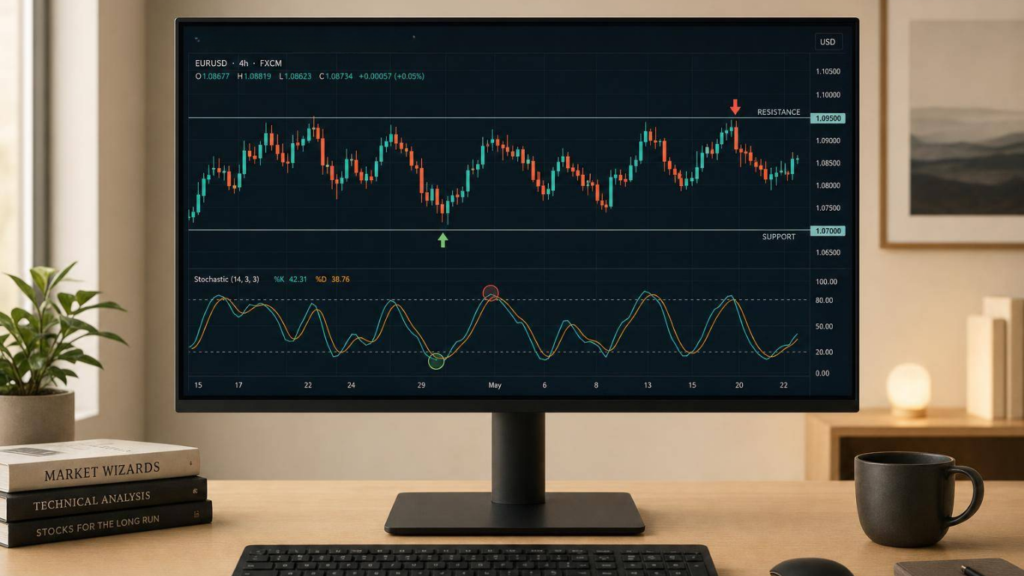
If I use stochastic in a sideways market, I only want three things: a clear range, a signal near the edge of that range, and

Higher revenue does not mean a business is earning more. If revenue climbs from S$500 million to S$600 million but net profit drops from S$50

Most chart patterns do not fail by accident. In many cases, the warning shows up early: weak volume, poor market context, a breakout that slips