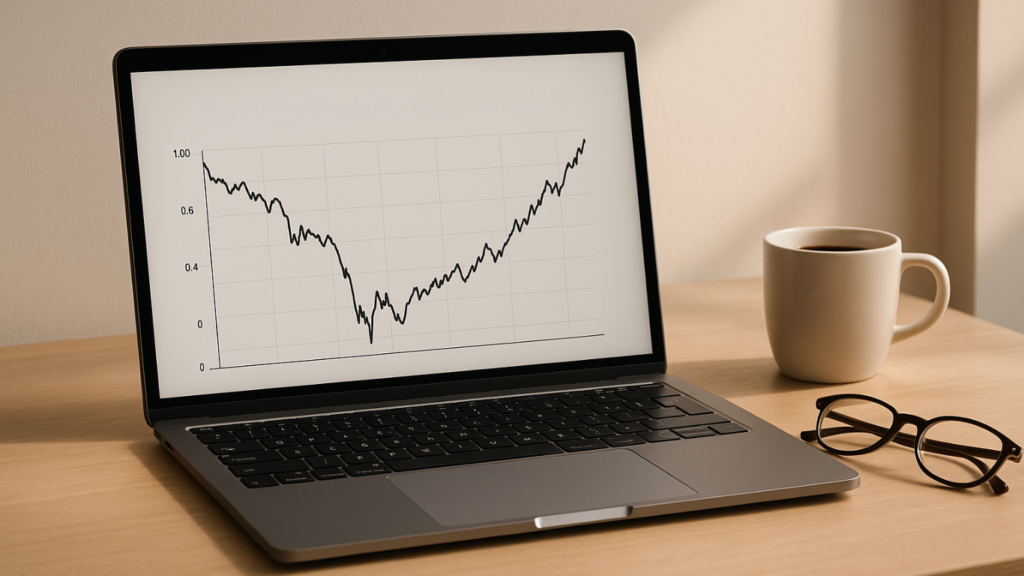
Drawdowns – how much your portfolio drops from its peak – aren’t just about losing money. They slow growth, halt compounding, and make recovery harder. For example, a 50% drawdown needs a 100% gain to recover. This article dives into five key impacts of drawdowns and how you can protect your portfolio:
- Recovering losses takes larger gains: A 25% drop needs a 33.3% recovery, while a 50% drop needs 100%.
- Compounding pauses: Time spent recovering is time lost for growth.
- Emotional stress: Fear during losses often leads to bad decisions like panic selling.
- Lower risk-adjusted performance: Metrics like Sharpe Ratio drop as volatility rises.
- Leverage constraints: Losses reduce your buying power and flexibility.
The key takeaway? Avoiding large drawdowns is easier than recovering from them. Strategies like risk management, position sizing, and diversification can help keep losses manageable and your portfolio on track. Let’s dive into the details.
1. Recovery Requires Larger Gains Than the Loss
Losses and gains don’t balance out equally. When your portfolio takes a hit, bouncing back to where you started requires a larger percentage gain. This imbalance is a key hurdle in managing investments.
Let’s break it down with an example. If your portfolio drops from S$100,000 to S$90,000, that’s a 10% loss. But to climb back to S$100,000, you need more than a 10% gain – about 11.1%, to be exact. Why? Because you’re starting from a smaller base of S$90,000. A 10% gain on S$90,000 only gets you to S$99,000, leaving you S$1,000 short.
The deeper the loss, the harder the recovery. For instance:
- A 10% loss requires an 11.1% gain.
- A 25% loss needs a 33.3% gain.
- A 50% loss demands a massive 100% gain.
Here’s how the numbers stack up:
| Drawdown Percentage | Required Gain to Break Even | Multiple of Original Loss |
|---|---|---|
| 10% | 11.1% | 1.1x |
| 25% | 33.3% | 1.3x |
| 50% | 100% | 2.0x |
| 65% | 184% | 2.8x |
The formula to calculate the recovery gain is:
Recovery Gain % = (Loss % / (100 – Loss %)) × 100
This equation shows how recovery becomes increasingly difficult as losses grow.
History offers a stark example. During the Great Depression (1928–1932), the S&P 500 plunged by 65%. To recover, it needed an astounding 184% gain – almost three times the initial loss.
Why is this so challenging? Because a smaller portfolio base means smaller absolute gains. For example, a 10% return on a reduced portfolio doesn’t generate the same dollar amount as before, making growth slower.
This is why preventing large losses is far more effective than trying to recover from them. Avoiding a 50% drawdown spares you from the daunting task of doubling your portfolio just to break even. Capital preservation is a much easier path to long-term growth.
Risk management plays a crucial role here. By limiting your risk per trade – typically to 1-2% of your portfolio – you can prevent catastrophic losses. For instance:
- Risking 1% per trade caps potential drawdowns at around 10%.
- Risking 5% per trade can lead to a 39% drawdown, which would require a 64% recovery gain.
The time value of money adds another layer to this issue. When your portfolio shrinks, you not only lose immediate value but also miss out on the compounding returns that could have been earned during the recovery period. For instance, if you suffer a 50% drawdown and it takes two years to recover with a 100% gain, that’s two years of lost growth potential – time that could have been spent generating new profits.
For investors in Singapore aiming to build wealth over the long term, this underscores the importance of disciplined risk management. By keeping losses manageable and using position sizing to adjust your exposure based on market conditions, you can minimise drawdowns and maintain steady growth.
Protecting your capital is far easier than recovering it. By understanding the mathematics of drawdowns and applying systematic risk controls, you can safeguard your portfolio and maximise its ability to grow over time. For more strategies on managing risk and position sizing, check out the resources at Collin Seow Trading Academy.
2. Compounding Stops During Recovery Periods
When your portfolio takes a hit, it’s not just the immediate loss that stings – it’s the ripple effect on your long-term growth. A drawdown doesn’t just shrink your portfolio; it also puts compounding on pause. Every day spent clawing back to your original value is a day your money isn’t growing. And this interruption can end up costing you more than the drawdown itself.
Compounding is what turns steady, modest returns into impressive long-term gains. But for compounding to work its magic, your capital needs to keep growing. During recovery periods, your portfolio isn’t compounding; it’s just trying to regain lost ground.
Here’s a simple example to show how this plays out: Imagine starting with S$100,000 and earning a steady 15% annual return. After two years, without any setbacks, your portfolio would grow to S$132,250. But if a 20% drawdown hits six months in, dropping your balance to S$80,000, and you continue earning 15% annually, you’ll only reach about S$128,000 after two years. That’s a difference of S$4,250 – money you could have earned if your capital had stayed intact. Over time, these gaps created by interrupted compounding grow even larger.
Historical data backs this up. Severe market downturns often lead to extended recovery periods, during which compounding effectively grinds to a halt. For instance, stocks with median drawdowns of 72% took about 4.3 years to recover, closely mirroring the S&P 500’s average recovery time of 4.2 years. On the flip side, stocks with smaller drawdowns – say, around 15% annually over two years – bounced back faster and nearly doubled in value by year five. Meanwhile, the worst-performing stocks retained only 40% of their value five years after their peak losses.
The numbers can be brutal. A 50% drawdown doesn’t just halve your portfolio – it demands a 100% gain to recover. If you’re earning 10% annually, that’s a seven-year climb just to break even. Seven years where compounding is on hold.
Frequent drawdowns also take a toll. Imagine experiencing four separate 5% dips in a single year, each requiring one to two months to recover. That’s six to eight months lost to recovery. On a S$500,000 portfolio earning 12% annually, this could mean about S$30,000 in missed gains.
This is why preventing drawdowns is far more effective than trying to recover from them. A balanced portfolio that drops 10% will recover much faster than an equity-heavy portfolio suffering a 30–40% decline. By preserving more capital during downturns, balanced portfolios allow compounding to resume sooner, accelerating long-term growth.
The long-term impact of these pauses is massive. Losing just one year to recovery in a 30-year investment horizon can reduce your final portfolio value by 8–10%. If you’re aiming for 8% annual returns, missing that final year of compounding – when your portfolio is at its largest – can significantly affect your wealth.
One way to guard against these interruptions is through systematic trading strategies. By using strict risk management tools like stop-losses and position sizing, you can limit the depth and duration of drawdowns. For example, a controlled 8% drawdown with a clear recovery plan might take just two to three months to overcome. In contrast, an emotional trader facing a 25% loss could be stuck in recovery mode for six to nine months – or even longer. These strategies not only preserve your ability to compound but also set the stage for steady, long-term growth.
The cost of being stuck in recovery mode goes beyond just the lost time. During market rallies, a portfolio still recovering from a loss misses out on potential gains. For instance, if your portfolio drops from S$200,000 to S$170,000 during a market correction (a 15% loss), and the market then rallies 20%, your portfolio would recover to only S$204,000. While that’s slightly above your starting point, the broader market would have gained significantly more.
Investors should also adjust their expectations to account for the reality of drawdowns. If historical data shows average annual returns of 12% but includes periodic 15% drawdowns with six-month recovery periods happening twice a year, the effective return drops to around 10–11%. That 1–2% difference, when compounded over decades, can lead to a noticeable gap in wealth.
The key takeaway? Every moment spent recovering is a moment your portfolio isn’t growing. Minimising drawdowns is just as important as achieving strong returns. By adopting disciplined risk management and systematic trading approaches, you can reduce the frequency and severity of drawdowns. This keeps your capital working for you, compounding consistently rather than playing catch-up. For more insights on managing drawdowns and building sustainable growth, visit Collin Seow Trading Academy.
3. Emotional Stress Leads to Poor Trading Decisions
Drawdowns aren’t just about numbers; they take a heavy toll on your mental state too. When your portfolio shrinks, it’s not just the financial loss that hurts – it’s the blow to your confidence. This often leads to panic-driven decisions, like selling at the worst possible moment, locking in losses, and missing out on potential rebounds.
The psychological impact can overshadow the mathematical challenge. For instance, while a 50% portfolio loss requires a 100% gain to recover, fear can push you to exit positions prematurely, often at market lows.
Behavioural biases exacerbate the issue. Loss aversion, for example, makes the sting of losing feel far worse than the joy of gaining. Imagine your S$200,000 portfolio drops to S$160,000 – that S$40,000 loss feels disproportionately painful compared to the pleasure of a S$40,000 gain. Overconfidence during good times can quickly flip into self-doubt during market downturns, while herd mentality tempts you to follow the crowd, often leading to irrational choices.
“Emotional decisions. Behavioural finance shows us how biases like loss aversion, overconfidence, and herd mentality derail disciplined strategies. For instance, fear of ‘locking.'”
- CollinSeow.com Blog
One particularly damaging bias is the fear of locking in losses. This fear can leave traders paralysed, clinging to positions in the hope of a recovery. But as losses deepen, panic sets in, often prompting sales at market lows. This not only cements the losses but also means missing out on the eventual market rebound.
Abandoning a well-thought-out strategy during a drawdown only makes things worse. Months or even years of disciplined planning can be thrown away in favour of impulsive, fear-driven decisions. This might lead to switching strategies at the wrong time or even stepping away from the market entirely, only to miss out on strong recovery phases. Sticking to a clear, tested strategy can help avoid these abrupt, costly shifts.
The best way to combat these emotional pitfalls is through disciplined risk management. Setting clear rules – like predetermined entry and exit signals, position sizing, and stop-loss levels – removes the need for emotional, on-the-spot decisions. For instance, if you risk only 1–2% of your account per trade, even a string of losses remains manageable. Such discipline not only helps you stay calm but also protects your overall performance, paving the way for better portfolio evaluation.
Systematic trading, backed by thorough backtesting and rule-based strategies, treats drawdowns as part of the process. Instead of letting emotions dictate your actions, you focus on following your system – sticking to entry rules, managing positions wisely, and honouring stop-losses. Even when short-term results are discouraging, this disciplined approach keeps you grounded.
For traders looking to build these essential skills, the Collin Seow Trading Academy offers structured resources to help you navigate emotional stress and maintain discipline in your trading journey.
Master Systematic Trading with Collin Seow
Learn proven trading strategies, improve your market timing, and achieve financial success with our expert-led courses and resources.
sbb-itb-466c9b0
4. Risk-Adjusted Performance Metrics Decline
When evaluating investment performance, it’s not just about how much you earn – it’s about how much risk you take to earn it. Drawdowns don’t just hurt your portfolio balance; they also disrupt the efficiency of your returns, which is clearly reflected in risk-adjusted performance metrics.
Take the Sharpe Ratio, for example. This metric measures the excess return you earn for every unit of volatility. The formula is straightforward: (Return – Risk-Free Rate) / Standard Deviation. However, when drawdowns increase volatility, the Sharpe Ratio drops, even if your returns remain unchanged.
Here’s a practical example. Imagine you’re managing a S$100,000 portfolio that delivers annual returns of 15% with 10% volatility. This gives you a Sharpe Ratio of 1.5 (assuming a 0% risk-free rate). Now, let’s say a market correction triggers a 20% drawdown, reducing your portfolio to S$80,000. Even if your portfolio eventually recovers to its original value, the increased volatility – rising to 15% – drags your Sharpe Ratio down to 1.0. Your returns haven’t changed, but your risk-adjusted performance has taken a hit.
Other metrics also suffer during drawdowns. For instance, the Sortino Ratio (which focuses on downside volatility) and the Calmar Ratio (annual return divided by maximum drawdown) are both negatively impacted. If your maximum drawdown doubles from 10% to 20%, your Calmar Ratio is halved, even if returns stay the same.
History provides clear examples of this. During the Great Depression, severe drawdowns had a prolonged effect on risk metrics. More recently, the S&P 500 experienced a maximum drawdown of 58%, taking 1.4 years to hit the bottom and 4.2 years to recover to its previous peak. Throughout this period, risk-adjusted metrics remained under pressure.
The math of recovery also complicates things. A 50% drawdown requires a 100% gain just to break even. During this recovery phase, volatility often stays elevated, keeping standard deviation high and suppressing metrics like the Sharpe Ratio.
So, how can you manage drawdowns and improve your risk-reward profile? Position sizing is key. By limiting the risk on any single trade to 1–2% of your portfolio, you can prevent large losses that spike volatility. For example, with a S$100,000 portfolio, risking only S$1,000–2,000 per trade helps keep drawdowns under control and preserves your risk-adjusted metrics.
Diversification is another powerful tool. Spreading investments across uncorrelated assets can stabilise your portfolio’s performance. A 60/40 portfolio (60% stocks, 40% bonds) has historically averaged 9% annual returns since 1928, compared to 11.8% for the S&P 500. While the 60/40 approach sacrifices about 2.8% in returns, it benefits from reduced drawdowns and lower volatility.
Systematic trading strategies also play a critical role. These rule-based approaches emphasise disciplined risk management, helping to keep drawdowns within predefined limits. For instance, trend-following strategies have shown resilience during market downturns, delivering median nominal returns of 5.5% and outperforming US Treasury bonds during such periods. This can help maintain healthier risk-adjusted metrics, even in volatile markets.
Tracking your performance metrics regularly is essential. Calculate your Sharpe Ratio, Sortino Ratio, and Calmar Ratio on a monthly or quarterly basis to monitor trends. A Sharpe Ratio above 1.0 is generally acceptable, while 1.5 or higher indicates stronger performance. Similarly, a Calmar Ratio above 1.0 means your annual returns exceed your maximum drawdown. If these metrics dip below your targets, it’s a clear signal to reassess your strategy or strengthen your risk management practices.
Ultimately, controlling drawdowns is about more than just preserving capital – it’s about sustaining strong, risk-adjusted performance. By managing volatility and keeping drawdowns in check, you can improve metrics like the Sharpe Ratio and ensure your portfolio remains on a steady path. For more insights on systematic trading strategies and risk management, check out Collin Seow Trading Academy.
5. Leverage and Position Sizing Become Constrained
When markets take a downturn, the effects on leverage and position sizing can significantly limit your ability to trade effectively. These constraints often create a challenging cycle, making it harder to recover from losses.
Imagine starting with S$100,000 in capital and using 2:1 leverage, giving you S$200,000 in trading power. After a 20% drawdown, your account drops to S$80,000, reducing your trading power to S$160,000 – a S$40,000 cut in your buying capacity. This reduction becomes particularly frustrating when you spot promising opportunities but lack the funds to act on them.
Brokers often tighten margin requirements during volatile periods, which can further complicate recovery efforts. For example, they might raise margin requirements from 20% to 30–40%, forcing liquidations if you can’t meet the new standards. These liquidations often target your largest or most volatile positions, potentially forcing you out of trades at critical recovery moments.
The situation can be even more severe for individual stocks. On average, stocks experience a maximum drawdown of 72%, taking about 2.9 years to recover to previous peaks. For the worst-performing stocks, recovery can be painfully slow – five years after a major drawdown, some portfolios remain at just 40% of their original value.
Position sizing becomes a key factor during these challenging periods. A significant drawdown might compel you to consolidate your holdings, shifting from 10 positions at 10% of your capital each to 5 positions at 20% each. This increases your concentration risk, meaning any further losses will have a greater impact on your portfolio.
Leverage magnifies these risks. With 2:1 leverage, a 10% market decline translates to a 20% portfolio loss, while a 30% market drop can cause a 60% portfolio decline – potentially triggering margin calls. To mitigate these risks, many systematic trading approaches recommend conservative leverage ratios, typically 1.5:1 or lower, along with maintaining cash reserves.
One effective strategy is fixed fractional sizing, which involves risking a fixed percentage of your trading capital on each trade – usually 1–2%. For instance, with a S$100,000 portfolio, risking 1% means each trade risks S$1,000. If a 20% drawdown reduces your portfolio to S$80,000, your risk per trade automatically adjusts to S$800. This approach helps limit losses during tough periods and reduces the likelihood of margin calls.
Planning ahead is crucial. Set clear rules for maximum acceptable drawdowns and position sizing before losses occur, as emotional decision-making during drawdowns can lead to costly mistakes. Regularly monitor your leverage ratio, available margin, and margin utilisation percentage. Consider setting triggers, such as reducing positions by 10% if your margin utilisation exceeds 70%.
It’s also important to understand how different instruments are affected by margin requirements. Stocks generally require 20–50% margin, while futures might need only 5–10%. However, margin requirements tend to rise across the board during drawdowns. Futures traders with tight stop-losses may face margin calls sooner than stock traders with wider stops, making it essential to adjust position sizes based on the instrument you’re trading.
Recovery times vary widely. A 10% drawdown might recover in weeks, but a 50% drawdown could take years. For example, during the Great Depression, the S&P 500 dropped by 65% and needed a 184% gain to recover. Many traders adopt a tiered recovery strategy, gradually increasing position sizes as their portfolio and available margin improve. However, it’s critical to avoid over-leveraging during this phase.
By implementing strategic position sizing, you can maintain flexibility and avoid being forced to reduce positions at unfavourable times. Adjust your exposure based on market conditions and the risk–reward profile of each trade, ensuring your portfolio remains resilient during periods of stress.
For more guidance on managing drawdowns and refining your trading strategies, check out the resources available at Collin Seow Trading Academy.
Drawdown Recovery Requirements
When it comes to recovering from losses, the numbers tell a clear story: the deeper the drawdown, the harder it is to bounce back. The relationship isn’t linear – it’s exponential. This means that as your losses grow, the percentage gain required to recover climbs disproportionately.
Here’s the formula at play:
Recovery Gain % = (Drawdown % ÷ (100 – Drawdown %)) × 100
Let’s break it down with an example. If you lose 10% of your portfolio, you’ll need an 11.11% gain to recover. But if your portfolio takes a 50% hit, you’ll need a staggering 100% gain – essentially doubling your remaining capital – to get back to where you started.
To make this more tangible, imagine starting with a portfolio worth S$100,000. Here’s how different drawdown levels affect your portfolio and the recovery needed:
| Drawdown Level | Portfolio Value After Loss | Required Gain (%) | Gain Needed (S$) | Recovery Multiple |
|---|---|---|---|---|
| 10% | S$90,000 | 11.11% | S$11,111 | 1.11x |
| 30% | S$70,000 | 42.86% | S$30,000 | 1.43x |
| 50% | S$50,000 | 100.00% | S$50,000 | 2.00x |
| 75% | S$25,000 | 300.00% | S$75,000 | 4.00x |
This table highlights the steep climb required after severe losses. For a 75% drawdown, you’d need to quadruple your remaining capital just to break even. That’s why safeguarding your portfolio is so critical – it’s far easier to avoid a major loss than to recover from one.
Lessons from Historical Data
The challenges of recovery aren’t just theoretical. Historical market data backs this up. For example, the S&P 500 Index once suffered a maximum drawdown of 58%, taking 4.2 years to recover to its previous peak. Individual stocks can fare even worse. The median drawdown for individual stocks hits 85%, with a median recovery time of 4.3 years. Among the bottom 20% of stocks, the median drawdown is 65%, lasting roughly 2.6 years.
These numbers have real-world implications. Imagine your S$100,000 portfolio drops by 50% to S$50,000. Even if you achieve a 25% gain, your portfolio only grows to S$62,500 – still 37.5% below your starting point. To fully recover, you’d need an additional 60% gain. This demonstrates how steep the road to recovery can be, even with strong returns.
Even after market troughs, recovery takes time. Following significant declines, the S&P 500 has delivered median annualised returns of 25% over five years. While impressive, these returns still mean years of waiting to fully recover from severe drawdowns – time during which your capital is tied up and can’t grow freely.
Why Prevention Beats Recovery
This is why avoiding large losses matters more than how quickly you can recover. For instance, avoiding a 50% drawdown means you’ll never face the challenge of needing a 100% gain to recover. These mathematical realities should shape every decision you make – whether it’s position sizing, setting stop-losses, or managing risk.
“The question of how much to buy is central to managing investment risk. Collin’s approach emphasises strategic position sizing, which involves determining the appropriate investment amount for each trade based on an individual’s risk tolerance and the trade’s risk-reward profile. This careful calculation helps traders manage their exposure to risk while optimising their portfolio’s growth potential.”
– Collin Seow
By understanding recovery requirements, you can set realistic goals and establish a maximum acceptable drawdown before entering any trade. For example, knowing a 30% drawdown demands a 42.86% gain to recover might lead you to cap your drawdown at 20%. A 20% drawdown only requires a 25% recovery gain – far more manageable and aligned with long-term growth.
The Risks of Leverage
For traders using leverage, the stakes are even higher. A 2:1 leveraged position facing a 25% market decline results in a 50% portfolio drawdown. To recover, you’d need to double your remaining capital – an uphill battle that underscores the importance of careful position sizing and avoiding excessive leverage.
The recovery table serves as a constant reminder: protecting your capital is both a defensive and offensive move. Every percentage point of loss you avoid spares you from the need for exponentially larger gains later.
For more insights into risk management and trading strategies, visit Collin Seow Trading Academy.
Conclusion
Drawdowns are an unavoidable part of investing, but their impact stretches far beyond the initial losses. They create a ripple effect that can disrupt even the most promising investment strategies. Here are five ways drawdowns can challenge your returns:
- Mathematical asymmetry: A 50% drawdown demands a 100% gain just to recover.
- Compounding halts: During recovery, your portfolio loses valuable growth time.
- Emotional stress: Fear and anxiety often lead to rash decisions that lock in losses.
- Weakened performance metrics: Risk-adjusted returns take a hit, affecting portfolio evaluation.
- Leverage and position sizing constraints: Reduced flexibility limits your ability to seize opportunities.
Historical data highlights the severity of these challenges. For instance, during the Great Depression, the S&P 500 had to climb 184% to recover from a 65% drawdown. Individual stocks often face even steeper declines, with median maximum drawdowns of 72% and recovery periods averaging 4.3 years.
The good news? You can minimise the damage of drawdowns with the right strategies. By focusing on systematic trading, strategic position sizing, and disciplined risk management, you can reduce both the depth and length of these setbacks. This approach not only protects your portfolio but also ensures it continues to grow over time.
Whether you’re managing a portfolio of S$50,000 or S$500,000, the core principles remain unchanged: protect your capital, stay disciplined during market turbulence, and let compounding work in your favour. The difference between surviving drawdowns and thriving through them lies in preparation, education, and execution.
If you’re looking to strengthen your trading skills, Collin Seow Trading Academy offers a range of resources to help you build a more resilient approach. From free courses like the Market Timing 101 E-Course to live webinars and in-depth training on systematic trading and risk management, you’ll gain the knowledge and mentorship needed to handle drawdowns with confidence and achieve lasting financial success.
FAQs
How can I stay calm and avoid panic-driven decisions during portfolio drawdowns?
Managing emotional stress during portfolio drawdowns is essential for maintaining clear and rational decision-making. Start by keeping your eyes on your long-term investment goals instead of getting caught up in short-term market swings. Remember, drawdowns are a natural part of investing and, at times, can open doors to new opportunities.
To keep your emotions in check, think about adopting a systematic trading strategy. This approach helps eliminate emotional bias and ensures more disciplined decision-making. If you’re unsure where to start, platforms like Collin Seow Trading Academy offer guidance on structured trading methods. On top of that, practising mindfulness techniques – like deep breathing or meditation – can help you stay calm and focused during market turbulence.
What are some effective risk management strategies to reduce the impact of drawdowns on my portfolio?
To reduce the impact of drawdowns on your portfolio, here are some practical risk management strategies to consider:
- Position sizing: Allocate only a small percentage of your portfolio to each trade. By limiting how much capital you risk on a single position, you can keep potential losses under control.
- Stop-loss orders: Set stop-loss orders to automatically exit trades if they move against you beyond a specific point. This can help prevent small losses from turning into much larger ones.
- Diversification: Spread your investments across a mix of asset classes, industries, or regions. This way, poor performance in one area won’t have an outsized effect on your overall portfolio.
By consistently applying these strategies, you can safeguard your portfolio and work towards steady, long-term financial growth. If you’re keen to refine your approach further, explore trading courses or webinars designed to enhance your skills.
Why is it important to understand how drawdown percentages relate to recovery gains, and how can this knowledge shape my investment strategy?
Understanding how drawdown percentages relate to the recovery gains needed is key to managing your investments wisely. Here’s why: as drawdowns grow, the gains required to recover to your original portfolio value increase significantly. For instance, if your portfolio experiences a 20% drawdown, you’ll need a 25% gain to get back to where you started. But if the drawdown hits 50%, you’ll need a staggering 100% gain just to break even. This underscores why keeping losses in check is so critical for maintaining long-term returns.
Armed with this knowledge, you can adopt a more disciplined investment approach that prioritises risk management. By limiting losses during market slumps, you not only safeguard your capital but also position yourself for steady and sustainable growth over the long haul.